Tuesday, August 11, 2020

This is How We Leave memoir by Joanne Nelson


 This is How We Leave

by Joanne Nelson


Memoir, 180 pages

Published August 11, 2020, Vine Leaves Press

Reviewed by Bill Mathis, http://www.billmathiswriteretc.com

$2.99 ebook

$14.99 Print

Buy on Amazon

Barnes and Noble

About the Book

Against a background of family runaways, award-winning memoirist Joanne Nelson explores what it takes to stay when the going begins to dazzle and the staying seems way too ordinary. With a great grandfather who disappears, a grandfather who strays, and a father who walks away, she’s lived a life liable to give way at any time. In unflinching prose that is by turns intimate and humorous, she dives deep into her own role (and even culpability) in a childhood marked by disruption, emotional abuse, and parental alcoholism.

Nelson’s working-class roots and catholic schoolgirl upbringing, experimentation with all things negative, and hopeful creation of a new family life all serve a passionate story that examines the many ways we leave our communities, our families, and even ourselves. It will surprise no one that she became a psychotherapist—working with families, children, and in schools to help others on a similar journey. Her innovative observations and careful attention to detail create an engaging narrative of just how quickly our pasts become the now—and just what we’re going to do about it!

 Bill's Review:

Throwing out her mother’s empty booze bottles found in the breezeway attic, eating a sandwich at her deathbed, and recalling how well her mother danced only hint at the gamut of emotions and truth so elegantly expressed by Joanne Nelson in her memoir This is How We Leave.

There are many ways to leave relationships: leave a note and walk out; meander away and never return; drink enough that one’s children don’t want to be around them; drink oneself to an early death; or experiment with risky practices trying to kill the pain. The bottom line, however, is that you can never truly leave family. In one manner or another, family is always with you. The times you leave and come back, how you cope with the loss—those missed opportunities—and how you make sense of the leaving is what I gained from this excellent book.

Beautifully written, Joanne Nelson explores her family and herself in scenes written from her life of growing up with an alcoholic mother who, even when physically present wasn’t there; a father who left the family and connected with Joanne through the window of his car parked along the street as she walked to school; and her knowledge of a great-grandfather who abandoned his family.

She contrasts the uncertainty and pain of her homelife with being able to visit her grandparents. Her snuff-dipping and spitting grandfather took her kite flying and played games with her. Her grandmother created a homey, cooking, crafting environment in their modest trailer home. It was a space of peace and certainty.

The book begins with Nelson in her home office describing a photo of her family taken when she was young at her brother’s birthday party. “We stand close together and take our cues from those on the other side of the table, the adults waiting for just one decent shot without all that goofing around so they can eat before the coffee gets cold or the candles burn down the house.”

How long do we take our cues from those on the other side of the table? At what age do we stop?

Joanne ends this scene by writing, “Those bookshelves hold the answers to why I’m down here: the manuscripts recounting stories of escape or return and the mementos that tell their own suspended, yet scripted tales. It’s the dual perspective of the little girl held close by her brothers in a corner of the kitchen, safe behind glowing candles of the woman at her desk in a basement office—the soft hum of the dryer in the background, pictures of her family surrounding her—who just wants to tell about it.”

After reading This is How We Leave, I’m not sure we ever quit taking our cues from those on the other side of the table. But how we leave, why we leave, how we come back to say goodbye—even while eating a sandwich—is critically important. Joanne Nelson goes deep in the gut to reveal truth and honesty like few other authors I’ve read.

I highly recommend this book. 5 Stars.

About the Author

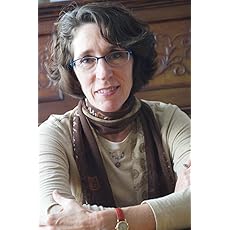
 Joanne Nelson

Joanne Nelson’s writing appears in literary journals such as Brevity, Midwestern Gothic, the museum of americana, Consequence, and Redivider. In addition, she is a contributor to Lake Effect on 89.7 WUWM, her NPR affiliate based in Wisconsin. Nelson lives in Hartland, Wisconsin, where she develops and leads community programs, maintains a psychotherapy practice, and adjuncts. More information is at wakeupthewriterwithin.com

Photo credit: Jia Oak Baker


Saturday, August 1, 2020

Great Lakes cultural history


The Cadottes: A Fur Trade Family on Lake Superior

The Cadottes, a fur trade family on Lake Superior

Robert Silbernagel

Wisconsin Historical Society Press May 29, 2020

ISBN: 9780870209406

304 pp

Ebook: $10.99

Hardcover: $28.95

Buy on Amazon 

Barnes and Noble 

About the Book:

The Great Lakes fur trade spanned two centuries and thousands of miles, but the story of one particular family, the Cadottes, illuminates the history of trade and trapping while exploring under-researched stories of French-Ojibwe political, social, and economic relations. Multiple generations of Cadottes were involved in the trade, usually working as interpreters and peacemakers, as the region passed from French to British to American control. Focusing on the years 1760 to 1840—the heyday of the Great Lakes fur trade—Robert Silbernagel delves into the lives of the Cadottes, with particular emphasis on the Ojibwe–French Canadian Michel Cadotte and his Ojibwe wife, Equaysayway, who were traders and regional leaders on Madeline Island for nearly forty years. In The Cadottes: A Fur Trade Family on Lake Superior, Silbernagel deepens our understanding of this era with stories of resilient, remarkable people.


My Review:

After having visiting Madeline Island not long ago, taking the Lake Superior Circle Tour, and living in Wisconsin, Silbernagel’s story brings the era of Great Lakes fur trading and the voyageurs’ rich history to life. His book makes me want to go back to the Island now and consider anew the events unfolding there 200 years ago.

The history of fur trade in the Americas is a jumble of nationalities, exploration, high competition, and rich in folk legend. Despite the fashion of beaver fur felted hats worn since the fourteenth century in Europe, the American trade came in relatively late, during the last hundred years of the fashion. Men like John Jacob Astor quickly and under nascent US government sanction took control of the fur industry and reaped the staggering benefits while its agents mostly had a subsistence living.

But the fur trade is only part of the story of the Cadottes. Delving into the complexities of Ashinaabe, British, French, and developing US territorial trade, treaty agreements, battle, customs, religion, language, education, and law, Silbernagel creates an amalgamation of Great Lakes culture in one easy-to read volume. Following the several generations of the Cadotte family from emigration to today, the author explains how the French came to explore the new world not to conquer but to take part in the people they met, which is how Michael, part Ojibwe, and his Ojibwe wife, whose English name was Madeline, met and married. In the late 1700s they married in a traditional Objibwe custom, but forty years later, formalized their union in a legal Catholic ceremony. Silbernagel explores their reasons in the chapter “A Method to their Marriage,” one of 24 chapters devoted to helping readers understand the unique history of a developing nation of which little written documentation exists, or survives.

Recognizing the end of the fur trade era was near, the Cadottes and descendants shifted to more general trade, an attempt at lumber trade and commercial fishing, and interpreting between the Ojibwe and US government representatives during this period of upheaval.

Filled with photographs and illustrations, maps and abundant references, the history lover is sure to find The Cadottes an excellent addition to one’s expanding knowledge.

About the Author

Robert Silbernagel studied journalism at the University of Wisconsin and spent his newspaper career in Colorado. He retired as the editorial page editor of The Daily Sentinel in Grand Junction, Colorado, and currently writes a history column for the newspaper. He is an avid horseman and enjoys outdoor activities in the West, as well as reading and writing about history, publishing books since 1975 on such subjects as Aldo Leopold and Colorado history.


Monday, June 15, 2020

new childrens book on COVID19


Our Bodies Stay Home, Our Imaginations Run Free 
by Lora L. Hyler
A Coronavirus COVID-19 Story for Children
Children’s book, 50 pages
Published by: HenschelHAUS Publishing, June 15, 2020
Reviewed by: Kathleen Fletemeyer
$5.99 Ebook
$8.99 Print
Paperback; 978159598-775-4

Buy from the Publisher
Smashwords

About the Book:
Our Bodies Stay Home, Our Imaginations Run Free helps children ages 6-10+ navigate their scary new world due to the coronavirus. Seven-year-old Maya is struggling with her feelings as she misses her classmates and teacher, her friends, her grandparents, and visits to her favorite places. And even worse, her 8th birthday is coming up during quarantine. How can she possibly have a party? With her family’s help, Maya understands she needs to do her part to help her family and community. 
Practicing proper handwashing, wearing a mask, and social distancing is needed. She finds joy in making masks, watching nature and creative play from afar. Maya is amazed when she has the best 8th birthday party ever.

Lora Hyler packs a public health wallop into this short, sweet book. She meshes her background as a news reporter with her skill in writing children’s adventure books to produce this timely tale of a family coping with today’s real-life adventure—COVID-19.

Seven-year-old Maya washes her hands extra-long, singing the Happy Birthday song not twice, but three times, in hopes it will make the coronavirus go away sooner so life can get back to normal. With her eighth birthday around the corner, she worries what kind of party she’ll have since everyone needs to stay at home. 

Parents will recognize their own challenges as the Thomas family eats ice cream with grandparents via video call, walks through their unusually quiet neighborhood, and stretches their imagination to put on a birthday party for Maya in these days of social distancing.

The entirely credible interactions of Maya and her older brother, Bryan, bring to life the disruption of virtual schooling, missing friends, and wearing masks. Mr. and Mrs. Thomas model supportive parenting as they respond to their children’s questions about the virus with equal measures of reassurance and age-appropriate medical information. The inclusive set of characters from school and neighborhood is an added reminder that we are all in this together. 

Our Bodies Stay Home, Our Imaginations Run Free never minimizes children’s bumpy emotions, nor their need to understand a changed world. The unchanging values of family and caring for one another underpin this story without becoming sentimental. For parents seeking a young-reader book that provides a can-do attitude when new phrases like “flatten the curve” fill the airwaves, they need look no further. 

About the Author, Lora Hyler:
My sense of adventure began when I discovered the Pippi Longstocking books by Astrid Lindgren and Charlie and the Chocolate Factory. Who doesn’t want to win a golden ticket and spend the rest of their life running a chocolate factory? My adventure-writing often began with real life travel adventures to children museums and distant lands.

I carried my love of reading and writing into a radio news career as a reporter for NPR affiliate, WUWM and ABC affiliate, WISN, both in Milwaukee, Wisconsin. I also worked for a media and an energy company managing writing, editing and strategic communications. In 2001, I started my public relations and marketing company, Hyler Communications, and worked with companies in many industries. Among them: Northwestern Mutual and Marquette University. I also worked in television, as a live guest commentator for two years on Today’s TMJ4 television station.

I’ve written hundreds of articles, several screenplays, short stories, and a novel. Now, I’m excited to write children books. I joined the 22,000 member international organization, Society of Children’s Book Writers and Illustrators (SCBWI) and have a mutually supportive relationship with my fellow authors. The Stupendous Adventures of Mighty Marty Hayes is the first in a planned three-part series.

My screenplays have not yet become movies, but I’ve had a lot of fun so far on the journey. I’ve met Hollywood producers and attended the Emmy awards!

About the Reviewer: Kathleen Fletemeyer managed outreach programs in healthcare for more than a dozen years. Her poetry appears in Midwest Review and the Creative Wisconsin Literary Journal. She is currently at work on her first novel. When the COVID-19 crisis passes, she looks forward to traveling again with her husband.


Thursday, June 11, 2020

new Alaskan romance from Barb Britton

Until June

Until June
By Barbara Britton
June 2020
Pelican Book Group
266 pp
Historical Romantic Fiction, Americana
Alaska

$5.99 Ebook
$15.99

Buy the book

About the book
When seventeen-year-old seamstress, Josephine Nimetz, agrees to take care of a WWI amputee in a remote Alaskan lodge, there's enough friction to melt the Mendenhall Glacier. Her position is only until June, and it pays well enough to overlook the hardship of managing a rustic home and a shell-shocked veteran.

Geoff Chambers makes it clear that he isn't too fond of the “runt” sent to take care of his needs, nor of her painful mistakes. Dealing with a depressed and addicted veteran, pushes Josephine to the brink of leaving, if not for the money her salary brings.

But Josephine is a perfectionist, determined to get Geoff back on his feet—figuratively...Although, sending a rich, handsome veteran back into society may cost Josephine the man she has grown to love.


My review
When a proper young Alaskan miss and a wounded and bitter WWI veteran are bound together by need, romance isn’t the first order of business.

Too determined to get Geoff on his feet, albeit wooden, once Jo finds the amputee’s wooden legs hidden in a closet, Jo forgoes dignity and gossip as they spend time together at an island lodge off the cost of Juneau, Alaska in 1918 and 1919. Birthdays and holidays pass over the course of nine months as Josephine turns to nurse and helpmeet from her work as a seamstress to help provide for her family after her stepfather is brutally murdered. The murder case remains open, and anxiety over the potential perpetrator keeps the sense of suspense present under the main theme of the story.

When most girls are completing high school, Josephine is stuck on a deserted island with a grumpy young man addicted to drugs. Worse yet, he’s trigger-happy, calls her a runt, and forces her to sin—by playing card games with him. When he calls her out on romantic stories she reads in a women’s magazine and dares her to enter a writing contest, Jo slowly amends her initial impressions of the soulful Geoff.

Scarcely older than Jo, Geoff had enlisted in army only to be wounded dreadfully early on. With his bad attitude, his prognosis is grim, and he’s sent away to recover or die in a secluded place where he won’t bother his stepmother and younger half-brother. But Geoff surprises everyone, including himself, when he realizes his life is far from over.

Told through our young heroine’s eyes, Britton has created an earthy and heartwarming romance filled with down-to-earth characters. Frankness and realism pepper this journey of healing from the inside out. Britton’s fans won’t find much of a leap from Biblical Israel to historical territorial America as her latest tale unfolds with her usual storytelling aplomb.

About the Author
Barbara M. Britton lives in Wisconsin and loves the snow--when it accumulates under three inches. Barb writes romantic adventures from Ancient Israel to Modern Day USA and especially enjoys bringing little-known Bible characters to light. She has a nutrition degree from Baylor University but loves to dip healthy strawberries in chocolate. Barb is a member of the Society of Children's Book Writers and Illustrators, Wisconsin Romance Writers of America, Romance Writers of America and American Christian Fiction Writers. You can visit Barb online at www.barbarambritton.com or follow her on Facebook and Twitter.

Thursday, May 28, 2020

debut YA author Kent Raddatz on bullying


The Boy Who Dreamed
Kent Raddatz

Young Adult
Fantasy
Kent Raddatz, publisher
May, 2020
Ebook - $2.99
Paperback - $7.9197 pp
ISBN: 979-8638-8225-07
Buy on Amazon

About the Book
Twelve-year-old Jacob Tannin is being bullied by Willard and doesn’t know what to do about it. He pretends to be invisible in the hopes that Willard will pick on someone else. It doesn’t work. And sometimes, while he’s being picked on, something sarcastic pops out of his mouth—which never goes over well. But Jacob’s also a dreamer. And when his dreams take him to another world called Chimeran, things begin to change. In Chimeran, he’s attacked by Haggeldies, a new set of bullies. But he also makes friends who try to teach him how to stand up for himself. As he goes back and forth between these two worlds, he’s forced to see others in a new way. And he’s encouraged to believe in the power that comes from what he thinks about himself. Will Jacob ever stop being afraid? What will give him the courage to speak up for himself? And how will he learn what he’s worth when bullies in both worlds say he’s nothing?

My Review:
Debut author Kent Raddatz has produced a winner for kids who like to read, especially those who read to escape problematic reality.

Jacob is every boy, on the verge of becoming a young man who is learning about the tough side of life, and deciding his path. Will he join the side that walks over those who are different, or will he develop empathy, no matter how much it hurts?

When Jacob takes that first step of reaching outside of his own insecurity, and wondering what life is like for others and realizing that everyone is a potential friend, life doesn’t get easier. Every encounter with someone in his greater, wider world shows him another piece of his developing life puzzle. Even family members become heroes when viewed through his newly maturing sight.

Raddatz’s story is told through young Jacob’s eyes, in the well-drawn voice of a twelve-year-old learning that life is bigger than himself. Reminiscent of my favorite book of all time, Dandelion Wine, readers, both boys and girls, who appreciate coming-of-age tales, watching their narrator get the big lessons and grow, will enjoy The Boy Who Dreamed.

About the Author:
Kent Raddatz is a writer and author of The Boy Who Dreamed, the story of twelve-year-old Jacob Tannin whose dreams transport him to another world. Yet the most important thing to know about Jacob is that he’s being bullied.
Professionally trained as a Pastor, Kent worked with many children who were bullied in a variety of ways. Some were physically attacked while others were verbally abused. All were forced to put up with angry people. He listened to their stories and encouraged them to accept and love who they are.
He is well suited to write about this subject because, in his own words, “at times I was bullied; while at other times I did the bullying [I was too small to use anything except my words].”
A member of SCBWI and the Wisconsin Writer’s Association, he attended the 2015 and 2017 Novel-In-Progress Book Camp where he was awarded the Fox Ridge Scholarship.

Friday, May 22, 2020

The Lacquered Talisman by Laurie Dennis

49090816

The Lacquered Talisman, A novel of 14th-Century China by Laurie Dennis 
Historical fiction, 300 pp
Published by Earnshaw Books Ltc. (Hong Kong), March 1, 2020
Reviewed by: Bill Mathis,

$19,99 Print
$9,49 eBook
Buy on Amazon

About the Book
A sweeping coming-of-age epic, The Lacquered Talisman launches the story of one of the most influential figures in Chinese history. He is the son of a beancurd seller and he will found the Ming Dynasty, which ruled China from 1368-1644. Known as “Fortune” as a boy, Zhu Yuanzhang has a large and doting family who shepherd him through hardship until drought ravages the countryside and heralds a plague. Left with nothing but a lacquered necklace from his grandfather, Chen the Diviner, Fortune is deposited in the village temple and is soon wandering the countryside as a begging monk. He encounters pockets of resistance to the ruling Mongol dynasty, studies the stars, and tangles with Taoists as he seeks to understand his destiny. Signs and dreams leave him convinced that he has a special fate. Is he to be the abbot of a monastery? A general? What matters most is that he prove himself to be a filial son.

Bill Mathis’s Review
A fascinating and intriguing historical novel of tragedy and fortitude! 5 Stars!

From the poorest of families emerges the filial son; From the worst of times emerges the hero…

Called Fortune as a boy, later called Vessel as a teen Buddhist monk wandering the country side, Zhu Yuanzhang did not appear to be destined for greatness. At least not to my Western mindset. Yet, later he grew up to found China’s Ming Dynasty.

The autumn dew has just turned white,
The moon is the same one shining on my old home.
I have brothers but they are all scattered,
No place remains for me to ask after their fate.

Zhu’s extended family made and sold bean curd, something he probably would have continued as an adult if his family wasn’t forced to leave the city due to drought. Moving from their tiny shop to the countryside, Zhu’s father sold a younger son to a farmer for money to purchase food. Tragedy upon tragedy occur in this well written and detailed novel. A plague kills most of the family and the orphaned Zhu is taken to a Buddhist monastery where his life is still a struggle due to the plague and political turmoil. He wears a lacquered box around his neck, a small talisman given to him by his beloved grandfather who bestowed much wisdom on the boy. The box serves as his constant remembrance of his family.

We part on the road, mist rising in the air,
Around the pavilion, leaves are now rare,
I sigh – oh, how we differ from the wild geese,
When they set off to travel, no one is left behind. (Bidding Elder Brother Goodbye)

A coming-of-age book, we follow Zhu from childhood to young adulthood. He makes several lasting friends that will later appear when he leaves the monastery. Along the way, he learns from the monks to read and write, to study the stars and become a leader.

Cut it doesn’t break,
Straightened, it still tangles,
This sorrow of separation,
It is no ordinary flavor in the heart…

The Lacquered Talisman is a rich, detailed look into 14th century China. Filled with accurate descriptions of the poverty, military and political turmoil, along with the religious customs, family congruity, respect for elders and dedication to one’s parents, the book drew me in and held my interest. There are a lot of details, but Laura Dennis presents them in a manner that I did not feel overwhelmed. Her scholarship and research is astounding.

This book deals with Zhu’s life from childhood into young adulthood. The prologue and epilogue set the stage for the next book of Zhu’s adult life. I can’t wait for it!

About the Author:
Laurie DennisI am a writer of historical fiction focused on the founding of China's Ming Dynasty. Why fixate on something that happened over 600 years ago? The early 1300s, when the Mongols ruled China, was an era of political crisis, lawlessness, and natural disasters. (Sound familiar?!) Zhu Yuanzhang 朱元璋, who emerged out of a large cast of contenders to claim the Dragon Throne, was one of the major figures in Chinese history. He has been written about extensively in Chinese, including fiction, drama, film, poetry, and more. And yet, his remarkable story is almost unknown in the English-speaking world. I want to change that. Visit https://www.lauriedennis.com

The Reviewer, Bill Mathis:
Bill Mathis writes about diverse families, warts and all. His fourth novel will publish in December of 2020. Follow him on Facebook—Bill Mathis Writer Etc or his website: http://www.billmathiswriteretc.com. Bill resides in Beloit, Wisconsin and is looking forward to traveling again when it’s safe.


Monday, May 18, 2020

WWA Book Review Jenny Knipfer historical series


Blue Moon, By the Light of the Moon series, book 2 by Jenny Knipfer
Inspirational Historical fiction
self-published, September, 2019, 382 pp
Reviewed by Joan Bauer of Wisconsin Writers Association

Print: $15.99

EBOOK: $5.99


Buy on Amazon

About the Book
The year is 1885 and unwed Vanessa Gulet must surrender her newborn son to her married twin sister, Valerie, to raise. A seed of bitterness grows in Vanessa. When the opportunity arises for her to have what she’s always wanted, Vanessa takes it despite the consequences to her family. Will Vanessa and Valerie remain at odds or will they allow the power of forgiveness to heal their strained relationship?


In a new town and reunited with her son, Vanessa finds more than she bargained for: love, friendship, and a home. Vanessa and Michael (the manager at her newly inherited business) feel the pull of attraction towards each other. Vanessa trusts him, but comes to question this trust when she finds he’s kept something from her.

Valerie, overcome with loss and grief, faces the diagnosis of multiple sclerosis just as her identity as a mother is threatened. Will she and her husband forge through these trials together or will these upsets cause them to drift apart?

Love seems to bloom in the most unlikely of places in Webaashi Bay for an old friend of Jenay’s and a woman who owns the local dress shop. A parallel tale of love, forgiveness, and reuniting lost things is spun by a local author adding another dimension to the tale of the Gulet twins and their saga


Joan's Review 
My mother was a twin, and while she and her sister were not identical, we always joked that they had a certain telepathy between them. This phenomenon is central to Jenny Knipfer’s Blue Moon, where the special relationship between identical twins Vanessa and Valerie--born to a life of privilege in late nineteenth-century Toronto--is perhaps irrevocably broken.

Valerie has chosen a conventional life with her husband Felix Wilson, a wine merchant. Her sister Vanessa falls in love with Renault La Rue, a dashing rail magnate, but their love does not last: she bears his child, Luis, without his knowledge, and her politically ambitious father demands that she allow childless Valerie and Felix to raise the boy as their own. Ten years later, when Vanessa inherits Renault’s business, she spirits Luis away to Webaashi Bay on the shores of Lake Superior to teach him about his father and claim her privilege as his mother.

Life in Webaashi Bay is fresh, romantic, and wild. The town “is attractively set, almost like a well-dressed lady. Superior is as her swishing gown of azure, the buildings as her waist, and the cliffs as her head and shoulders with the trees as her headdress.” Here, Vanessa finds a welcoming community of strong, independent women. But her new friend Jenay is linked to Renault’s mysterious death, and when Vanessa learns the truth, Jenay must work to overcome the harm her silence has done.

In the same way, Vanessa must find a way to repair the terrible rift she has created in her own family. Back in Toronto, Valerie is diagnosed with multiple sclerosis, and Vanessa is called upon to help her adjust to her new limitations. In the process, the two of them will learn new ways to parent the son they both cherish.

Each section of Blue Moon is rigorously time-stamped; while this technique ensures clarity, it can also be a little distracting. But Knipfer creates a strong sense of place, and she draws on her own experience with MS to depict the course of Valerie’s illness with great sensitivity. As the twin sisters seek to recover their special relationship, each finds solace and redemption in a faith based solidly on gratitude.

Author
Jenny lives in Wisconsin with her husband, Ken and their pet Yorkie, Ruby. She is also a mom and loves being a grandma. She enjoys many creative pursuits but finds writing the most fulfilling.

Jenny’s education background stems from psychology, music, and cultural missions. She spent many years as a librarian in a local public library but recently switched to using her skills as a floral designer in a retail flower shop. She is now retired from work due to disability.

She authored and performed a self-published musical CD entitled, Scrapbook of a Closet Poet. Jenny acquires joy in the journey as an author. Ruby Moon, the first title in her historical fiction series: By the Light of the Moon, earned a five star rating from Readers' Favorite. Her books are available in eBook and paperback formats through Amazon and Ingramspark.

Jenny holds membership in the: Historical Novel Society, Wisconsin Writers Association, and Midwest Independent Booksellers Association.

Reviewer
Joan Bauer holds a Master’s degree in English from Marquette University and has worked as a trust officer in a bank. In the course of raising three children, she has chaired fundraisers, served on boards, and volunteered frequently at church and school. She is working on her third novel.